The process of ending a marriage can be emotionally challenging for parents. For children, parental divorce often feels even more stressful and confusing. Research shows that children of divorced parents are significantly more likely to experience “serious psychological and social problems” (25%) compared to children whose parents remain married (10%) (Kelly & Emery, 2003). These multifaceted challenges can hinder child development post-divorce, creating long-lasting emotional and behavioral obstacles that may persist well into their adulthood.
In this article, TNP Lawyers will examine the common psychological impacts of divorce on children and offer actionable insights to help divorced parents support their children’s emotional well-being during this challenging time.
COMMON PSYCHOLOGICAL IMPACTS OF DIVORCE ON CHILDREN
Emotional Impacts

The emotional responses of children to parental separation are evident and, most often, immediate. This significant life transition can leave children feeling emotionally vulnerable, with common feelings of irritability, confusion, anxiety, among many others. Research indicates that children are particularly affected by the emotional states of their parents: divorced parents often experience heightened levels of depression, which can inadvertently influence their children, increasing their chance of internalizing these negative emotions (Hoyt et al., 1990).
In Vietnam, such emotional effects on children are often compounded by societal stigma surrounding divorce. Even though our society has become a lot more open, divorce is still, to a certain extent, condemned by many people. This cultural perception of divorce can deeply undermine children’s self-esteem and further exacerbate the emotional vulnerability they already experience during this challenging transition.
Over time, these emotional struggles can have far-reaching consequences. Persistent emotional instability increases the risk of developing depression or anxiety disorders, many of which may require professional help. In many cases, prolonged distress can even weaken the immune system, making children more susceptible to illness and other health problems.
Related articles:
Navigating the complexities of child support post-divorce
Unilateral divorce in Vietnam: Conditions and Procedures
Behavioral Impacts
Unaddressed emotional struggles caused by parental divorce often lead to negative behavioral changes that disrupt children’s development. Such behavioral shifts might act as coping mechanisms for children as they go through a difficult family transition. For example, withdrawing socially may serve as a way to avoid uncomfortable questions or interactions with peers, while delinquent behaviors might reflect their attempt to regain a sense of control in an unstable environment.
These coping mechanisms, however, often strain social relationships. Children of divorced parents often feel insecure about their family situation, wondering if they are the only ones experiencing such a transition. This insecurity can make it harder for them to connect with others and form meaningful relationships. Over time, these feelings of isolation and embarrassment may deepen, further complicating their social adjustment.
Long-term Implications
Empirical evidence from several longitudinal studies suggests that the effects of parental divorce on children are long-lasting and often detrimental to their outcomes in adulthood. According to Costa et al. (2009), children’s educational performance post-divorce might decline as they find it difficult to concentrate and maintain good grades during a period of emotional turbulence. As a result, they are more likely to have lower tertiary education attainment compared to those from intact families, largely due to the lack of parental guidance during critical developmental years. In the future, this educational disadvantage further translates into limited career opportunities, reduced financial stability, and other adulthood challenges.
Research has also shown that parental divorce significantly impacts future relationship dynamics of children–those who experience parental divorce are more likely to encounter marital dissatisfaction or even divorce in their own relationships. According to Nicholas H. Wolfinger, a researcher at the University of Utah, growing up in a divorced family greatly increases the likelihood of ending one’s own marriage—a phenomenon known as the “divorce cycle”.
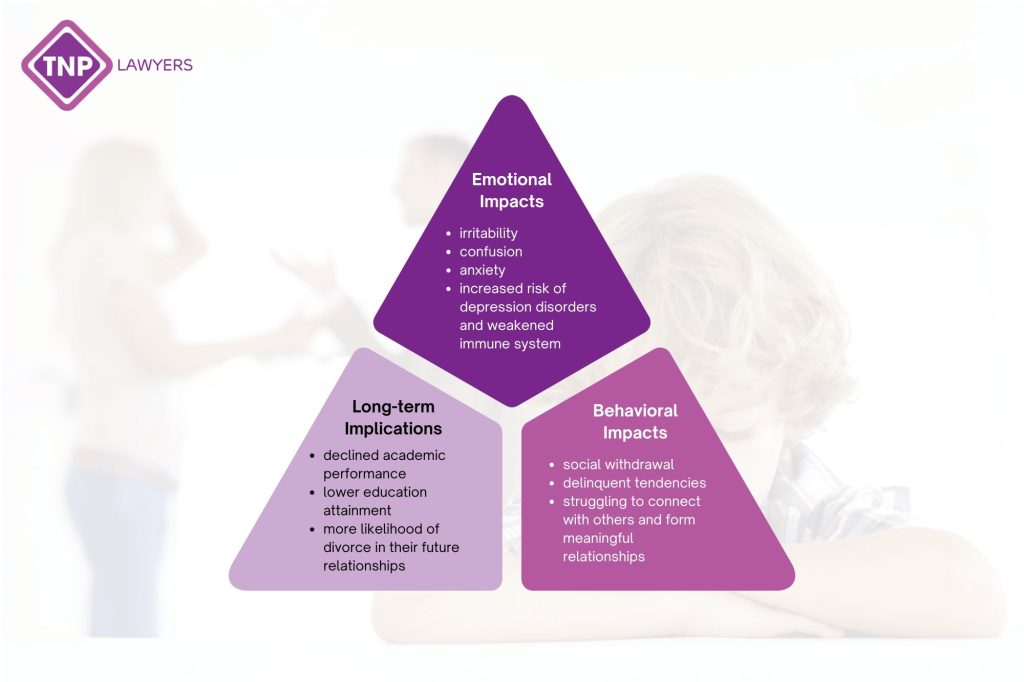
- Effects of Divorce on Children
FACTORS INFLUENCING THE PSYCHOLOGICAL IMPACTS OF DIVORCE ON CHILDREN
While we have explored the common psychological impacts of parental divorce on children, it is crucial to acknowledge that the nature and severity of these effects varies. Not all children from divorced families experience the same level of distress or long-term consequences, as several key factors influence the way they are affected.
Age Group
There is no doubt that children in different age groups process parental divorce in different ways. A report by Hoyt et al. (1990) highlights patterns in how children respond to such events based on their age: children aged 7–8 years often experience grief and sadness, while those aged 9–10 are more likely to feel anger, loneliness, and embarrassment. The study also found that if parents divorce during a child’s early years, the emotional effects can persist until they become teenagers.
The early stages of childhood, which is a critical period for cognitive and emotional development, often present the greatest adjustment challenges for children as they cope with the absence of a parental figure.
The Degree and Duration of Parental Conflict
The level and persistence of parents’ conflict during and after divorce can profoundly influence the extent of psychological impact on children. Hostile divorces, especially those involving verbal or physical aggression, expose children to emotional turmoil that leads to internalized stress and development of unhealthy behavior patterns later on in their lives. Parental conflict’s impacts on child outcomes demonstrate the profound psychological scarring that such issues can inflict on vulnerable young minds, especially in the context of a divorce.
Unfortunately, the continuation of hostility is sometimes exacerbated by adversarial legal procedures that focus on blame and retribution over children’s best interests.
Amount of Social Support
Studies on children of divorced parents have shown that social support has significant short- and long-term effects on their adjustment and well-being. For example, children who reported decent social support also reported less anxiety, fewer negative beliefs regarding divorce, and fewer behavioral difficulties (Portes et al., 1999). Such support might come from their grandparents, teachers and even peers, who reinforce a sense of continuity and belonging.
Unfortunately, not all children have access to such support networks, or that they are not encouraged to socialize by parents. Without strong social ties, they might find it harder to cope with the changes in their family structure, potentially leading to prolonged isolation and anxiety.
WAYS DIVORCED PARENTS CAN SUPPORT CHILDREN
Ending one’s marriage does not mark the end of parental responsibilities. When it comes to divorce settlements, children’s benefits should be of utmost consideration for any parent. Here are some ways that divorced parents can support their children and ensure their emotional, academic, and personal well-being in the long term.
Establish a Clear Co-parenting Approach
Effective co-parenting can help alleviate the psychological toll of divorce on children, especially during their early stages of childhood. While child custody arrangements establish visitation schedules, financial responsibilities, and decision-making powers regarding children’s essential matters, a well-structured co-parenting plan goes a step further. It outlines how parents will collaborate in daily parenting, ensuring consistency and stability in their children’s lives.
Here are some co-parenting tips that divorced couples can consider:
Unified rules and discipline: Consistent discipline is crucial for children to enjoy a comforting sense of normalcy after parental separation. Parents should agree on core rules such as screen time limits, daily routines, and consequences for misbehavior.
Active parental involvement: Making effort to spend quality one-on-one time with your children—such as attending their school performances or playing sports together—shows them they are cared for and supported by both parents even after the divorce.
Focus on positive reinforcement: Acknowledge and praise your child’s achievements, no matter how small. Positive reinforcement can significantly boost their self-esteem and foster positive emotions.
While peaceful co-parenting after separation is rarely easy, mutual effort is crucial to shield children from relationship conflicts and minimize long-term effects of divorce. Let what’s best for their benefits motivate your actions.
Open Communication from Both Parents
Open dialogue is essential in helping children cope with the emotional challenges of divorce. Parents should be upfront about the situation and explain it in simple, age-appropriate terms so that children can understand the reasons behind the divorce. A young child might be told: “Sometimes grown-ups can’t live together happily anymore, but we both still love you very much.”
On the other hand, it is equally important to create a safe space where children can express their feelings, showing that their emotional responses to parental divorce are heard and validated. Even with open communication, children may still be hesitant or unwilling to express their emotions. If you notice signs of distress or unusual behavior, consider seeking professional interventions.
It is worth noting that as children mature, their questions and feelings about the divorce may change, which requires persistent communication efforts from both parents. Addressing such concerns with honesty and empathy is crucial to minimize the long-term emotional impact. Silence or avoidance can lead to unresolved feelings, potential resentment, and psychological implications in their own future relationships.
Build a Supportive Network for Children
Besides receiving care from parents, children of divorce would greatly benefit from strong support systems that provide emotional stability, guidance, and reassurance. Of course, parents play a central role in facilitating such support systems for their children.
Both parents can encourage children to maintain connections with extended family members, who offer great emotional support during this challenging transition. Grandparents, aunts, uncles, and cousins often provide a sense of continuity and unconditional love that helps children feel secure. Meanwhile, school teachers and peers are also critical in creating safe spaces for children to process their thoughts and distract from negative emotions caused by parental divorce.
The key is to create a comprehensive network that surrounds the child with understanding, patience, and consistent emotional support, helping them navigate the misery of parental divorce with resilience and hope.
Consider Professional Help if Needed
While some children go through parental divorce with relatively few problems, others might have a very difficult time, including those with weak emotional endurance. According to HelpGuide.org, warning signs such as substance abuse, self-injury, frequent violent outbursts, etc. indicate the need for professional intervention. It is crucial for parents to seek effective intervention strategies for children as soon as they notice any of these signs.
Therapists and mental health professionals play a crucial role in helping children process complex emotions and develop healthy coping mechanisms. These professionals can also provide valuable guidance to parents, helping them understand and better support their children throughout the divorce. Timely professional guidance can prevent long-term psychological complications for children and help the entire family transition more smoothly through this challenging period.
For example, family counseling services are a valuable resource for households navigating divorce, offering children a safe space to express their emotions while helping parents foster empathy and rebuild connections with them. If you are tight on budget, online support groups can be a practical alternative. These groups provide a platform to share experiences, receive guidance from others in similar situations, and access advice from professionals—all without the high costs associated with traditional counseling.
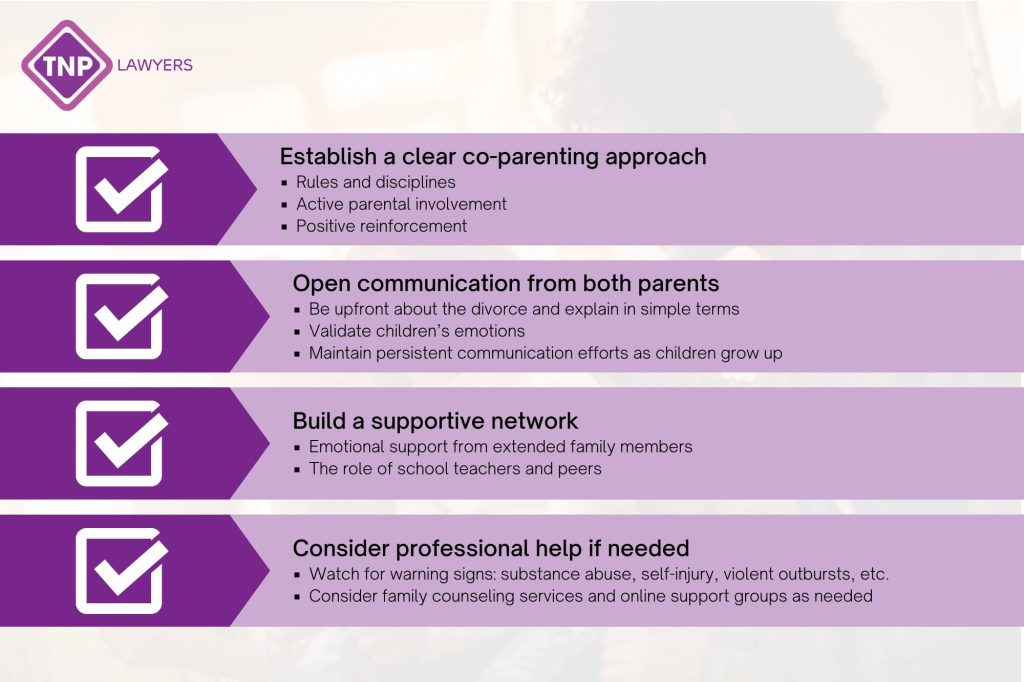
How to Help your Child Deal with Divorce
CONCLUSION
Divorce is a complex life transition that can greatly reshape family dynamics, with children bearing the most significant psychological burden. From immediate emotional impacts to potential behavioral problems and other long-term implications, the consequences can be devastating for children. Understanding the impact of divorce on child emotions, behavior and other psychological aspects is a crucial first step for parents to develop targeted interventions that reinforce their emotional resilience during this challenging period.
Vietnamese family lawyers at firms like TNP Lawyers recognize that dissolving a marriage can ultimately be for the good, but it requires prioritization of children’s psychological needs and mutual efforts from both parents. Experienced family law practitioners in Vietnam emphasize that by establishing solid co-parenting strategies, maintaining open communication and consistent support, and seeking timely intervention strategies for affected children, parents can minimize the psychological impacts of divorce on their loved ones and help them adjust in the healthiest way possible.
Contact TNP Lawyers today for a confidential consultation:
Ho Chi Minh City Office Locations:
- Level 11, Vincom Tower, 72 Le Thanh Ton Street, Ben Nghe Ward, District 1
- Vinhomes Grand Park, Nguyen Xien Street, Long Thanh My Ward, District 9
- Phone: (+84) 909 128 420
- Email: nathy.nguyen@tnplawyers.com
- Website: www.tnplawyers.com