Divorce is never easy—it’s a deeply emotional experience paired with complex legal challenges. Many individuals face feelings of anxiety, uncertainty, and even fear during this process, which can cloud their judgment and complicate decision-making. Fortunately, struggling couples can get help working toward resolutions for their divorce somewhere other than court: mediation. In Vietnam, participating in divorce mediation requires a strategic approach and even professional guidance to ensure your legal rights are thoroughly protected.
In this article, TNP Lawyers will explore the key aspects of divorce mediation, explain why professional legal representation is essential, and provide practical tips for choosing the right lawyer to support you throughout the mediation process.
2. Divorce Mediation in Vietnam: an Overview
2.1. What is Divorce Mediation?
In the context of Vietnamese law, divorce mediation is a mandatory procedure that must be carried out in resolving a divorce by mutual consent. Divorcing couples work with a neutral third party (the mediator) to reach mutually agreeable resolutions for divorce-related issues like property division and child custody. Mediation aims to resolve disputes amicably and encourage reconciliation if possible.
Some benefits of divorce mediation include:
- Cost-effectiveness
- Confidentiality and controlled process
- Preserving family relationships
Related articles:
Marriage and Family Dispute Resolution in Vietnam
Principles of Property Division after Divorce in Vietnam
2.2. Forms of Divorce Mediation
There are two forms of mediation in divorce: grassroots-level mediation and court mediation.
- Grassroots-level mediation: Article 52 of Vietnam Law on Marriage and Family 2014 stipulates that the State and society shall encourage grassroots-level mediation when a husband or wife requests a divorce. However, grassroots-level mediation is not a mandatory procedure but only encourages the parties to reach mutual agreements and voluntarily resolve their conflicts. If grassroots-level mediation fails or is not carried out, after the divorce petition is filed and accepted, the court will conduct mediation according to civil procedures.
- Court mediation: Clause 2, Article 397 of the Civil Procedure Code (2015) stipulates that: “Judges must conduct mediations to unify husbands and wives; explain about rights and obligations between wife and husband, parents and children and between members of family and rights and obligations in providing alimonies and other matters related to marriage and family…”. For mutual consent divorces, court mediation is a mandatory procedure; but for unilateral divorce cases, it is not mandatory.
2.3. Steps of Divorce Mediation Process
The major steps of a divorce mediation process are as follows:
- Step 1: The mediator begins by explaining the purpose of mediation and setting ground rules for the session.
- Step 2: Both parties present their perspectives on the disputes, supported by additional arguments and reasoning. Individuals with related rights and obligations are also given an opportunity to express their viewpoints.
- Step 3: The mediator analyzes the case based on relevant legal and ethical principles, helping both parties understand their respective rights and obligations. The legal consequences of proceeding with the divorce are also explained so that both parties can voluntarily reach their own resolutions on the case.
- Step 4: If the parties reach an agreement and resolve their conflicts, the mediation is successful. If they are unable to do so and wish to proceed with the divorce, the mediation is unsuccessful.
One crucial point that cannot be overstated is that mediators do not provide legal advice or make decisions for the spouses. They only act as a neutral third-party who helps both parties communicate effectively and guides them towards a mutual resolution.
3. Why Legal Representation Matters in Divorce Mediation
Since mediators purely support communication and do not provide legal counsel, legal representation serves as a critical safeguard for spouses navigating the mediation process. The complexities of Vietnamese law require a sophisticated understanding to ensure that both parties’ legal rights and interests are adequately protected throughout divorce mediation.
Legal representation in mediation is essential for interpreting statutory provisions, reaching a fair resolution, and understanding potential implications of any agreements made upon divorce. Without professional guidance, divorced couples may struggle to comprehend the nuanced legal aspects of their case, increasing the risk of unintended concessions or inequitable outcomes. By ensuring that the legal framework is properly applied and understood, legal representation helps both parties work toward a mutually beneficial agreement.
4. Benefits of Hiring a Lawyer for Divorce Mediation
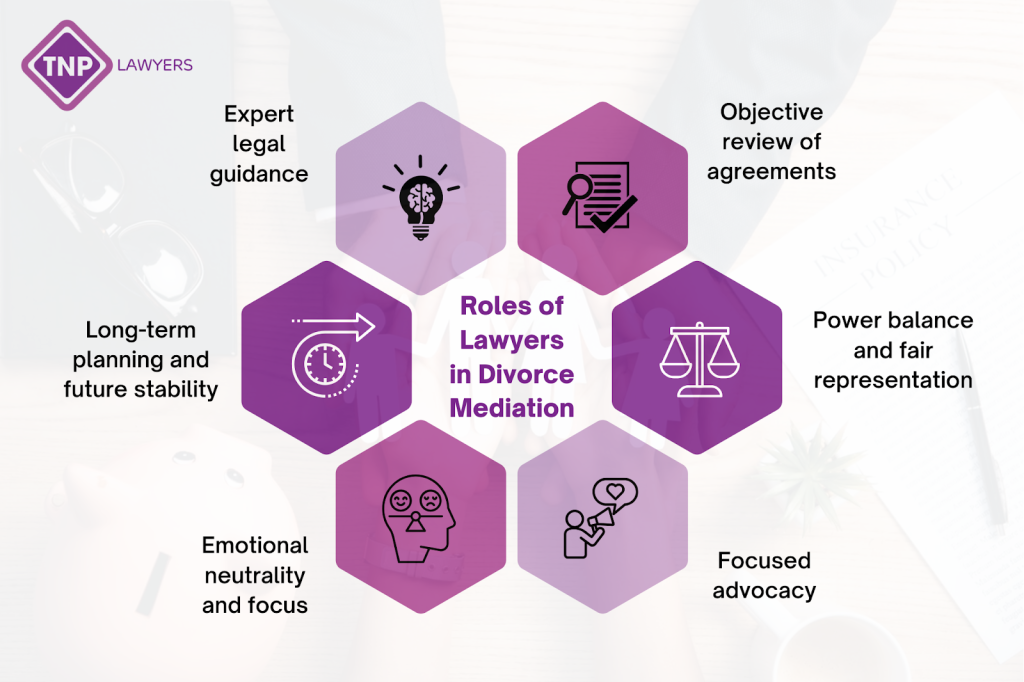
Roles of Lawyers in Divorce Mediation.
When the divorce is amicable and both parties are willing to collaborate, spouses can participate in divorce mediations without the need for individual lawyers. However, in case complex disputes are involved, or that involved parties are not confident enough about their legal knowledge and negotiation skills for divorce, hiring a lawyer would bring great benefits. The lawyer acts as an advocate who ensures that your rights and benefits are safeguarded during the mediation process.
Engaging a lawyer in divorce mediation offers invaluable advantages, ensuring a balanced and informed process that protects your rights. Here’s a closer look at the critical roles lawyers play and how they contribute to achieving fair resolutions:
4.1. Expert Legal Guidance
With a thorough comprehension of Vietnamese family law and other relevant laws, lawyers provide clear insights into how such provisions apply to your situation, particularly in matters like property division, child custody considerations, and spousal support. They help you identify potential legal risks and weigh the implications of your options, ensuring that your decisions are well-informed and aligned with your rights.
For example, property division upon divorce, particularly matters involving land use rights, is often complex and carries significant future implications. Having expert legal advice can be valuable in this case, helping involved parties secure fair agreements and prevent unwanted future disputes.
4.2. Objective Review of Agreements
Lawyers carefully evaluate the fairness and legal validity of proposed settlements to ensure they align with your rights and long-term needs. They are skilled at identifying potential pitfalls, such as vague terms or gaps in agreements, that may lead to disputes in the future. By addressing these critical details, you can reach a comprehensive and durable agreement that minimizes misunderstandings and ensures fairness for both parties.
For example, a spousal support agreement that does not adequately address what happens if the paying spouse’s income changes, or if the receiving spouse remarries, may lead to unnecessary disputes in the future. A lawyer ensures these critical details are accounted for, such as including provisions to adjust payments based on income changes or to terminate support upon remarriage.
4.3. Power Balance and Fair Representation
In cases where one spouse holds more legal knowledge or negotiating capability than the other, having a lawyer provides essential advocacy to ensure equitable outcomes. Without legal representation, the disadvantaged party may feel pressured to accept unfavorable terms to avoid prolonged proceedings. This imbalance can be particularly evident in property division matters upon divorce, where a spouse might use their knowledge to undervalue shared assets or obscure key financial information.
By leveling the playing field, a lawyer not only safeguards the disadvantaged party’s interests but also promotes an outcome that is both equitable and legally sound. This advocacy is vital to maintain the integrity of the mediation process and protecting vulnerable parties from being forced into unfair agreements.
For instance, if one spouse has sole control over family finances, they may present incomplete disclosures about joint property, leaving the less-informed spouse unaware of their rightful share. A lawyer counters this by conducting a thorough review of financial disclosures, verifying the accuracy of asset valuations, and advocating for equitable terms, all while ensuring that legal rights are fully upheld.
4.4. Focused Advocacy
While mediators remain neutral and do not represent either party, your lawyer is there solely to protect your rights and interests. They help you articulate your concerns and goals, negotiate effectively, and ensure that the final agreement aligns with your priorities. This focused advocacy ensures that your voice is heard and your needs are fully considered throughout the mediation process.
4.5. Emotional Neutrality and Focus
Certain discussions in a divorce mediation can bring up intense emotions, making it easy to get sidetracked. A lawyer provides a calm, emotionally-neutral perspective that helps you keep key goals in mind and drives rational decision-making. This support is especially crucial for the more vulnerable spouse, who might be intentionally provoked by the other party and struggle to advocate for themselves. Additionally, a lawyer can even serve as a source of emotional support during mediation by offering guidance that is both professional and empathetic.
For instance, child custody mediation can be one of the most stressful parts of the entire process, but it doesn’t have to overwhelm you. With a professional lawyer advocating for your interests, you can remain calm and composed, focusing on reaching the best settlements that prioritizes the child’s benefits.
4.6. Long-term Planning and Future Stability
One of the most significant advantages of having a lawyer in divorce mediation is their ability to plan for the long term. Whether it’s child custody arrangements or property division, divorce agreements have lasting implications on your future life. With decent legal experience, lawyers understand how current decisions can entail significant legal and financial consequences years ahead, thereby helping you draft terms that account for future stability.
Lawyers also help anticipate potential future challenges, such as changes in income, shifts in living arrangements, or evolving needs of children as they grow. Their foresight and strategic thinking allows them to draft divorce settlement agreements that are not only fair in the present but also adaptable to future circumstances.
5. Selecting the Right Divorce Mediation Lawyer
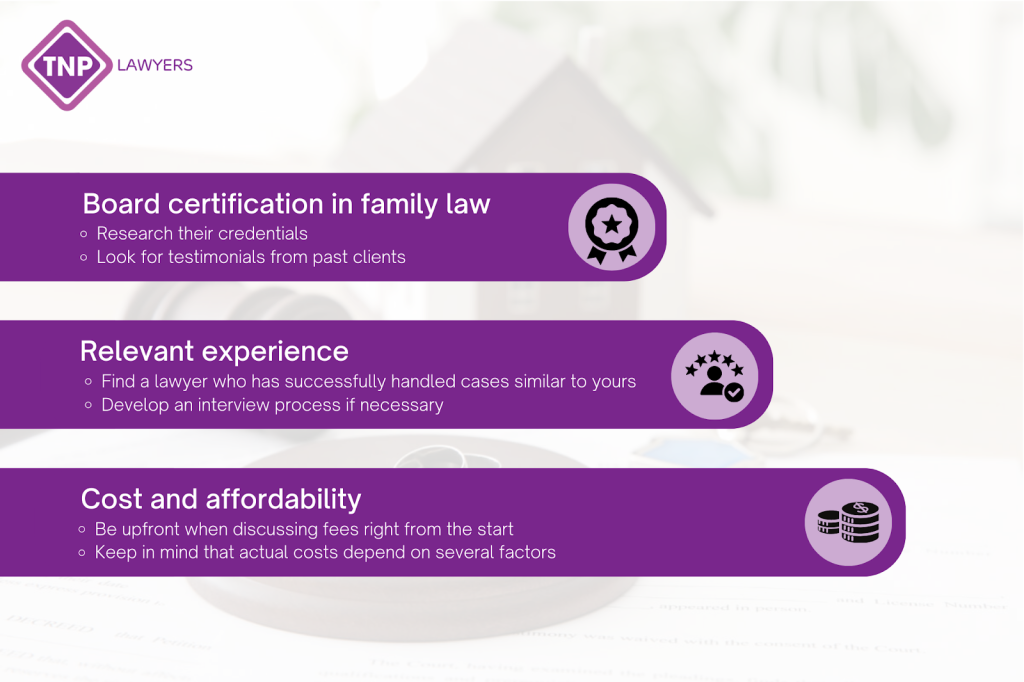
Criteria to Choose the Right Divorce Mediation Lawyer
Choosing the right lawyer for your divorce mediation is a crucial step in ensuring a smooth and effective process. The lawyer you select should not only possess necessary legal expertise but also align with your specific needs and priorities. Here are three key criteria to consider when making your decision:
5.1. Board Certification in Family Law
A board-certified family law attorney possesses a thorough understanding of Vietnamese family law, as well as other relevant legal frameworks. Their certification is a testament for specialized knowledge and experience in handling divorce mediation cases. It’s worth taking time to research their credentials and make sure you are entrusting your case to someone with the right qualities. If possible, you can search for testimonials or quotes from past clients to further confirm the lawyer’s credibility and expertise.
5.2. Relevant Experience
Experience is critical, especially when dealing with something as important as divorce mediation. You would want a lawyer who has successfully handled cases similar to yours–those that might involve complex property division, high-conflict custody arrangements, or other unique challenges. A lawyer with a solid track record is better equipped to understand the nuances of your situation and help you achieve the best outcome possible, all while protecting your legal rights throughout the divorce mediation process.
We suggest developing a structured interview process, if necessary, as you select a lawyer to evaluate their past experience and approach to marriage issues. This process can help you decide whether this person is suitable for your specific case.
5.3. Cost and Affordability
Divorce can already be financially stressful, so choosing a lawyer whose fees suit your budget is essential to maintain cost-effective divorce solutions. Keep in mind that actual costs often depend on factors such as the complexity of your case, the lawyer’s level of expertise, and their professional reputation. Be upfront when discussing expenses right from the start, including any potential additional charges, to avoid surprises later on and ensure the services align with your financial situation.
By evaluating these criteria, you can select a divorce mediation lawyer who will effectively protect your rights, provide sound guidance, and help you achieve a fair and lasting resolution.
6. Conclusion
Divorce mediation is more than just resolving immediate issues; it’s about reaching agreements that best prepare you for the next chapter of life and support your long-term well-being. This underscores the importance of legal advice: A skilled lawyer would be your strategic partner in this process, ensuring that today’s decisions don’t compromise your tomorrow.
Having a lawyer who represents you in divorce mediation ensures that agreements are fair, practical, and legally sound, while future disputes are proactively avoided. With the right lawyer, you can approach divorce mediation with more confidence and work towards a successful outcome, knowing that your legitimate interests are fully accounted for.
Take the First Step Toward a Fair Resolution Today
Don’t navigate the complexities of divorce mediation alone. TNP Lawyers specializes in Vietnamese family law and offers the expert guidance you need to protect your rights and secure your future during this challenging time.
Our team of experienced family law attorneys provides personalized support tailored to your unique situation, ensuring that your voice is heard and your interests are prioritized throughout the mediation process.
Contact TNP Lawyers today for a confidential consultation:
Ho Chi Minh City Office Locations:
- Level 11, Vincom Tower, 72 Le Thanh Ton Street, Ben Nghe Ward, District 1
- Vinhomes Grand Park, Nguyen Xien Street, Long Thanh My Ward, District 9
- Phone: (+84) 909 128 420
- Email: nathy.nguyen@tnplawyers.com
- Website: www.tnplawyers.com